What Most Homeowners Don’t Know Before They Buy Kitchen Cabinets
Choosing cabinetry kitchen cabinets is one of the biggest decisions in any renovation, yet most homeowners walk into it knowing very little about what separates a cabinet that holds up for twenty years from one that starts sagging in five. The door style catches your eye first, the finish seals the deal emotionally, and by the time you get to questions about box construction and core material, you’re often already committed. This guide changes that. We’ll walk you through the decisions that actually matter — wood species, door profiles, finish types, and how the cabinet box is built — so you can evaluate quality before anything is ordered or manufactured.
Quick Answer
The quality of kitchen cabinets comes down to four things: the material used in the box construction, the wood species or finish on the door, how the door profile is built, and whether the hardware (hinges, drawer slides) is soft-close as standard. Cabinets that score well on all four will outlast trends, tolerate daily wear, and fit your space precisely — especially in older homes with walls that aren’t perfectly square.
What Is Cabinet Box Construction, and Why Does It Matter More Than the Door?
The cabinet box is the structural backbone of everything you see. The door gets the attention, but it’s the box that carries the weight of your dishes, your pots, and years of opening and closing. A well-built box determines whether your kitchen with cabinets still looks level and tight in a decade.
Most cabinet boxes are built from one of three core materials: solid wood, plywood, or medium-density fibreboard (MDF). Each has real trade-offs worth understanding.
Plywood is the most recommended choice among cabinet makers for a reason: it resists moisture better than particleboard, holds screws firmly, and is structurally strong without being excessively heavy. A plywood box, when built with proper joinery, will not sag under heavy loads the way a particleboard box often does.
MDF offers an extremely smooth surface that takes paint finishes beautifully, which is why it’s commonly used for door faces and painted cabinet fronts. As a box material, it performs reasonably well in dry environments but can swell if exposed to prolonged moisture near a dishwasher or sink.
Particleboard is the least expensive option and common in many stock and semi-custom lines. It is heavier than plywood for equivalent thickness, holds screws less securely over time, and is the most vulnerable to moisture damage. If a quote seems exceptionally low, particleboard box construction is often one of the reasons.
Beyond the core material, pay attention to how the box is assembled. Dado joinery (where the shelf sits in a routed groove rather than resting on pins or staples) produces a significantly stronger case. Dowel or pocket-screw assembly is acceptable when done properly; staple-only construction is a warning sign.
At Trending Kitchen Cabinets, every box we manufacture uses quality-graded materials selected for the specific environment of your kitchen — not whatever costs least at the time of your order.
How Do Wood Species Affect the Look and Longevity of Kitchen Cabinets?
The wood species used on your cabinet doors and frames shapes both the aesthetic and the durability of the finished product. Different species carry different grain patterns, hardness ratings, and staining characteristics, and knowing the differences lets you make an informed choice rather than simply picking based on a showroom sample under flattering light.
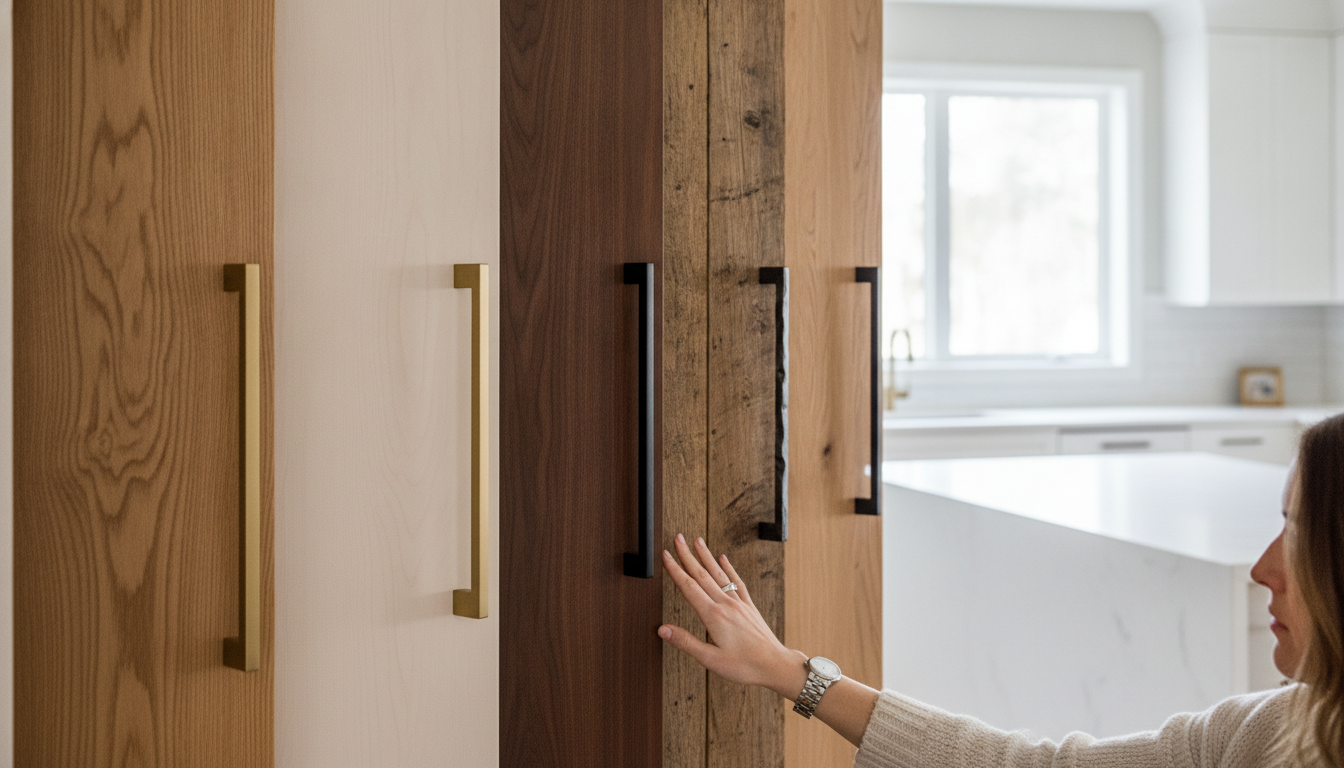
Maple is one of the most popular species for kitchen cabinet doors in North America. It has a tight, consistent grain with minimal variation, which makes it ideal for painted finishes where you want a smooth, uniform look. Maple is hard, resists dents well, and takes stain evenly.
Oak carries a pronounced open grain that is immediately recognizable. It’s extremely durable and takes stain readily, though the grain texture means it shows more character (and more variation) than maple. Oak fell out of fashion in the 1990s but is seeing renewed interest in natural, warm-toned kitchens.
Cherry starts with a lighter pinkish-brown tone and deepens into a rich reddish hue over time through natural light exposure. It’s a softer hardwood than maple but still appropriate for kitchen use. The colour shift is a feature for some homeowners and a surprise for others — worth knowing before you choose it.
Walnut offers the darkest natural tone of the common cabinet species, with a straight to slightly wavy grain and a naturally luxurious appearance. It’s one of the more expensive choices but requires less staining because its natural colour is already rich and even.
Thermofoil and laminate are not wood species but are worth mentioning here because they’re common in modern custom kitchen cabinets. Thermofoil is a vinyl film applied over MDF under heat and pressure, producing a seamless, easy-clean surface available in a wide range of colours and textures. High-quality laminate performs similarly. Both are excellent for contemporary kitchens where a painted-wood look isn’t the goal.
| Material | Grain Character | Best For | Paint-Ready | Relative Cost |
|---|---|---|---|---|
| Maple | Tight, uniform | Painted and stained finishes | Excellent | Mid |
| Oak | Pronounced open grain | Natural stained finishes | Moderate | Mid |
| Cherry | Fine, slightly wavy | Traditional, warm kitchens | Not typical | Mid-High |
| Walnut | Straight to wavy, rich tone | Luxury, contemporary kitchens | Rarely needed | High |
| Thermofoil / Laminate | Smooth, uniform (not grain) | Modern, minimalist kitchens | N/A (pre-finished) | Mid |
What Are the Most Common Door Styles, and Which One Fits Your Kitchen?
Door style is what most people mean when they say they want a “modern kitchen cabinet” or a “traditional look.” It’s the visible language of the design. The right door style doesn’t just match a trend — it fits the architecture of your home, your chosen hardware, and the finish you’re planning to apply.
Shaker
Shaker is the most versatile door profile available today. It features a flat recessed centre panel framed by square-edged rails and stiles. It reads as both classic and contemporary depending on the finish, which is why it works in homes across Mississauga and the broader GTA regardless of the decade they were built. If you want a deeper look at why this profile has stayed dominant, our article on Shaker Cabinets Explained: Why This Style Dominates Modern Kitchen Design covers it thoroughly.
Slab (Flat Panel)
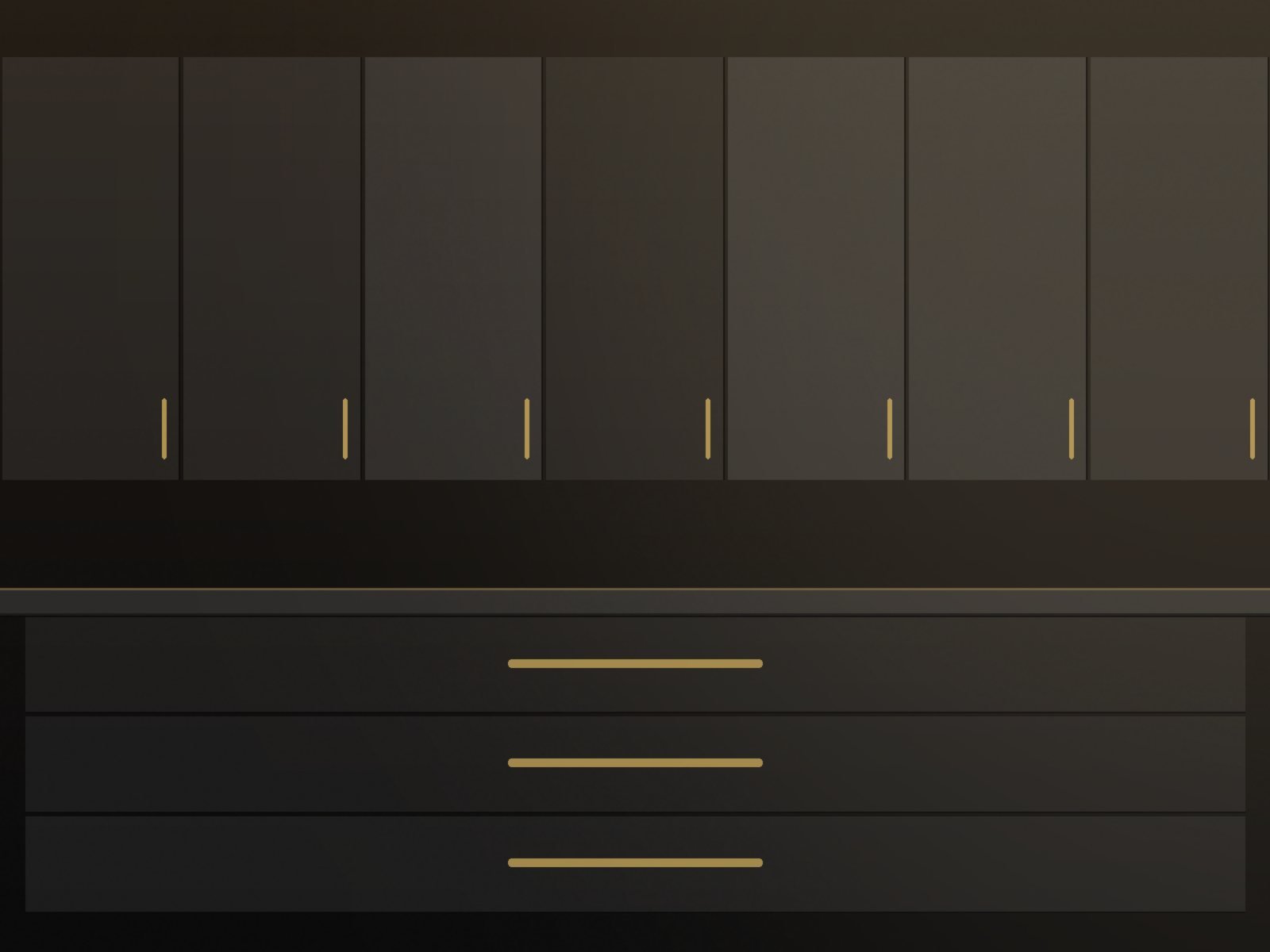
A slab door is exactly what it sounds like: a single flat panel with no frame, no raised profile, and no recess. It’s the defining choice for handle-less, minimalist kitchens. Slab doors work best in high-gloss or matte painted finishes, and they require precise installation because there’s nothing to visually conceal minor misalignment. Modern custom kitchen cabinets in contemporary homes often use slab doors for their clean horizontal lines.
Raised Panel
The raised panel door has a centre panel that is bevelled or shaped to sit above the surrounding frame. It’s a traditional profile associated with more formal, ornate kitchen styles. While less common in new renovations today, it remains a strong choice for homeowners who want a kitchen that feels anchored in classic craftsmanship rather than contemporary minimalism.
Glass Insert and Open Frame
Glass inserts — clear, frosted, reeded, or leaded — are used selectively to break up a run of solid cabinet doors and add visual interest. Open-frame cabinets without any panel have seen strong uptake in transitional kitchens where the homeowner wants to display curated items without committing to fully open shelving.
Why Does Finish Choice Affect Both Appearance and Long-Term Maintenance?
The finish on your cabinet doors and frames does two jobs simultaneously: it creates the visual character of the space, and it protects the underlying material from moisture, grease, and daily contact. Getting the finish wrong means repainting or refinishing far sooner than you planned.
Painted Finishes
A professionally applied, catalyzed paint finish — the kind sprayed in a controlled manufacturing environment and oven-cured — is significantly more durable than a brush-applied field finish. It resists chipping, yellowing, and staining in ways that site-painted cabinets simply cannot match. If you’re choosing painted kitchen cabinets, ask how the finish is applied and cured. The answer tells you a great deal about expected longevity.
Stained Finishes
Stain penetrates the wood grain rather than coating the surface, which means the natural character of the species comes through. A clear or tinted topcoat is applied over the stain for protection. Stained finishes show wear more gracefully than painted surfaces — small scuffs blend into the grain rather than standing out as chips. They are, however, harder to touch up consistently if significant damage occurs years later.
High-Gloss and Matte Lacquer
High-gloss lacquer produces the reflective, almost mirror-like surfaces popular in European-style kitchens. It makes spaces feel larger and brighter but shows fingerprints and smudges readily. Matte and satin lacquers offer the same colour intensity with a softer sheen that hides surface contact marks better in busy family kitchens. The choice between gloss levels is partly aesthetic and partly practical — a household with young children may genuinely prefer a low-sheen finish for the daily ease of it.
Natural and Wire-Brushed Finishes
Wire-brushing is a technique where the softer grain fibres are removed to create a textured, tactile surface with visible depth. Combined with a light natural stain or oil finish, it produces the warm, organic look that has become central to Scandinavian and transitional kitchen design. These finishes are exceptionally good at hiding everyday wear because the texture itself absorbs and conceals minor marks.
How Custom Sizing Makes a Real Difference in Older GTA Homes
Custom sizing is not a luxury upgrade. In many older homes across Mississauga, Brampton, Erin Mills, Milton, and Burlington, it is the only way to get cabinets that actually fit. Homes built decades ago were not constructed to today’s standard module widths. Walls aren’t always plumb, ceilings aren’t always level, and corner angles are sometimes a degree or two off square — which means in-stock kitchen cabinets that look right on paper arrive on site and leave gaps, filler strips, or awkward overhangs that no amount of trim work fully hides.
Custom kitchen cabinets in Mississauga — built to the actual measurements of your specific space — eliminate that problem entirely. When a base kitchen cabinet is built to the precise height, depth, and width your room requires, the finished result looks intentional rather than adapted. This is one of the most common reasons homeowners in the GTA who renovated with stock cabinetry come back to us for a second kitchen asking for custom.
The same principle applies to kitchen & bath cabinets and bathroom vanities. A bathroom in a 1960s or 1970s home may have an alcove that is 61 inches wide — a measurement that no standard vanity addresses cleanly. A custom-built unit fills that space completely, with no gaps and no compromise on storage depth.
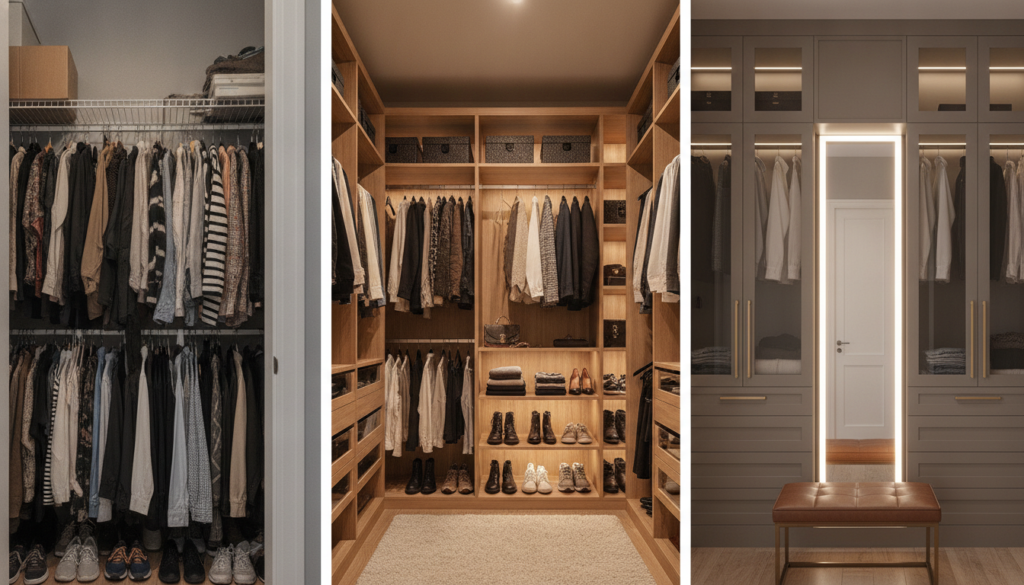
The same logic extends to custom walk-in closet design and walk-in closets throughout the home. Older bedroom dimensions often have unusual nooks, sloped ceilings, or awkward doorways that make standard closet systems a poor fit. A closet built precisely to those dimensions turns an underused space into a genuinely functional one. For bathrooms, our guide on Bathroom Remodel Planning Guide: Cabinets, Vanities, and Countertops That Work Together walks through the same approach applied to vanity and cabinet sizing.
At Trending Kitchen Cabinets, every project begins with precise field measurements taken by our own team — not estimates. We build to those measurements in our Mississauga facility and install with the same team that designed the project. That continuity means no detail gets lost between a designer’s drawing and the moment a cabinet goes on the wall. For kitchen renovation projects in Erin Mills, kitchen renovations in Milton, kitchen renovation in Brampton, or custom kitchen cabinets in Burlington, this single-team approach is a core part of how we consistently deliver a finished result that fits and functions as designed.
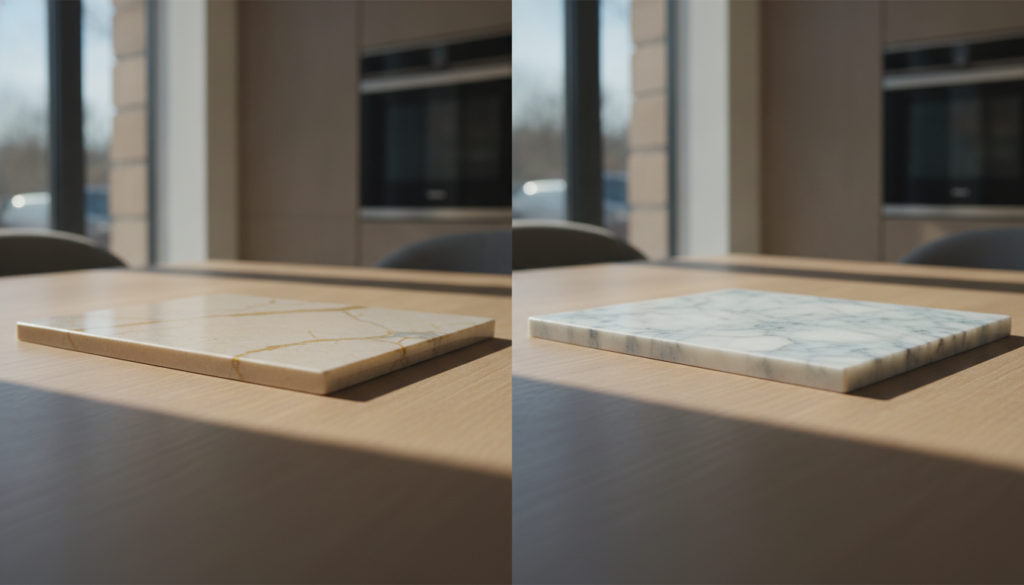
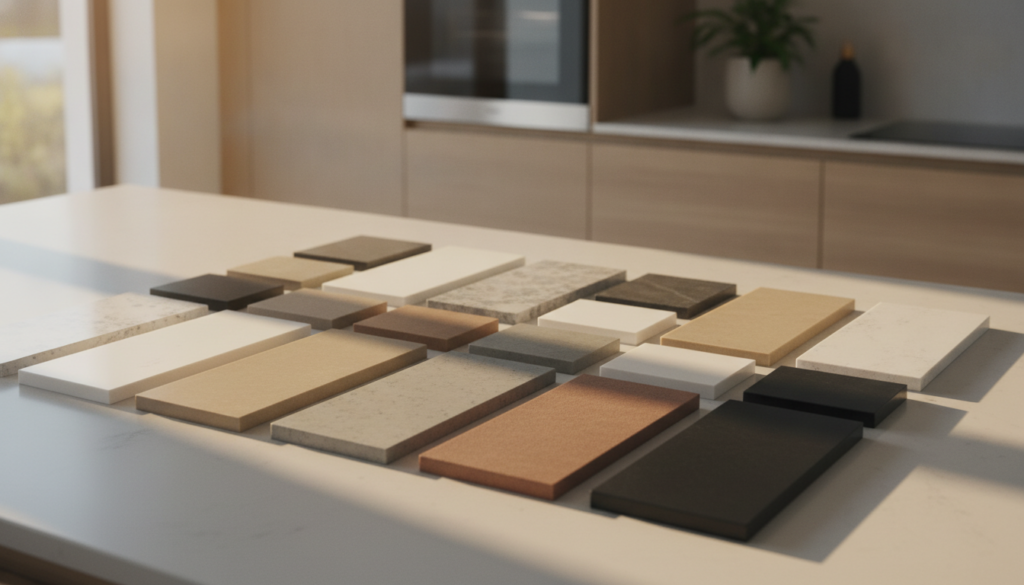
Countertops are part of this same precision story. Because our cabinetry is built custom, the countertop templating process starts from cabinets that are already level and true rather than shimmed and adapted. This directly affects how cleanly a quartz or granite slab fits and how the finished seam work looks. If you want to understand what that process involves, our article on Countertop Installation: What to Expect From Measure Day to Final Fit explains each step clearly.
Every cabinet we build includes soft-close doors and drawers as a standard feature — not an optional upgrade. It’s a small detail that homeowners notice every single day, and it reflects the standard we hold across the whole job, from the box construction right through to the final hardware adjustment.
Ready to Plan Your Kitchen Cabinets?
Our team designs, manufactures, and installs every cabinet under one roof, with a fixed written price and 3D design visualization before anything is built. No surprises, no subcontractors, no filler strips hiding a poor fit. If you’re planning a kitchen renovation in the GTA — in Mississauga, Brampton, Erin Mills, Milton, or Burlington — we’d love to show you what truly custom looks like.
Written by the Trending Kitchen Cabinets Design Team
Our team designs, manufactures, and installs custom cabinetry, countertops, closets, bathroom vanities, and home bars for homeowners across the GTA from our Mississauga facility. Every guide we publish reflects real decisions we work through with clients every week — not generic advice pulled from a template.
Frequently Asked Questions
What is the most durable material for kitchen cabinet boxes?
Plywood is widely regarded as the most durable box material for kitchen cabinets. It resists moisture better than particleboard, holds screws firmly over time, and maintains its structural integrity under the weight of heavy kitchen items. MDF is a close second for painted applications, but plywood is the stronger long-term choice for the cabinet box specifically.
How do I know if I need custom kitchen cabinets or if stock cabinets will work?
If your kitchen measurements align cleanly with standard module widths (typically 9-inch increments) and your walls are plumb and level, well-made semi-custom cabinets may fit adequately. However, if your home was built before the 1980s, has walls that aren’t square, or has an unusual layout, custom-built cabinetry will produce a significantly better result. The only way to know for certain is to have a professional measure the actual space rather than estimating from a floor plan.
Why do soft-close hinges and drawer slides matter beyond comfort?
Soft-close hardware reduces the impact stress on cabinet frames every time a door or drawer closes. Over years of daily use, the cumulative effect of hard slamming loosens joints, stresses the finish around hinge points, and can cause drawer faces to shift out of alignment. Soft-close hardware extends the structural and cosmetic life of the cabinetry — which is why we include it as standard on every job rather than offering it as a paid upgrade.
Can I see my kitchen design in 3D before manufacturing starts?
Yes — and at Trending Kitchen Cabinets, this is a standard part of every project, not an optional service. We produce a full 3D design visualization of your kitchen with cabinets, countertops, and finishes before any cutting or manufacturing begins. This lets you confirm proportions, door swing clearances, and overall aesthetic in a realistic rendering, and make any changes at the design stage when adjustments are straightforward rather than costly.